










Understanding The Objective of 13 Card Rummy
Many new players spend hours memorizing individual rules without grasping the big picture. When you finally understand The Objective of 13 Card Rummy, every move you make becomes intentional and sharp. Instead of just picking and throwing cards randomly, you start playing with a clear purpose.
Fundamentally, knowing the rules tells you how to play, but knowing the objective tells you why you are playing. This subtle shift in mindset separates the amateurs from the experts. Therefore, mastering the ultimate goal is your very first step toward consistent victories.

In this guide, we will break down exactly what you need to achieve when you sit at the table. By the time you finish reading, you will understand the game’s core purpose just as well as any seasoned veteran in India or Pakistan.
What is 13 Card Rummy?
To truly appreciate the goal, you must first understand the game itself. 13 card rummy is a traditional draw-and-discard matching card game. It relies heavily on mathematical probability, observation, and skill, rather than pure luck.
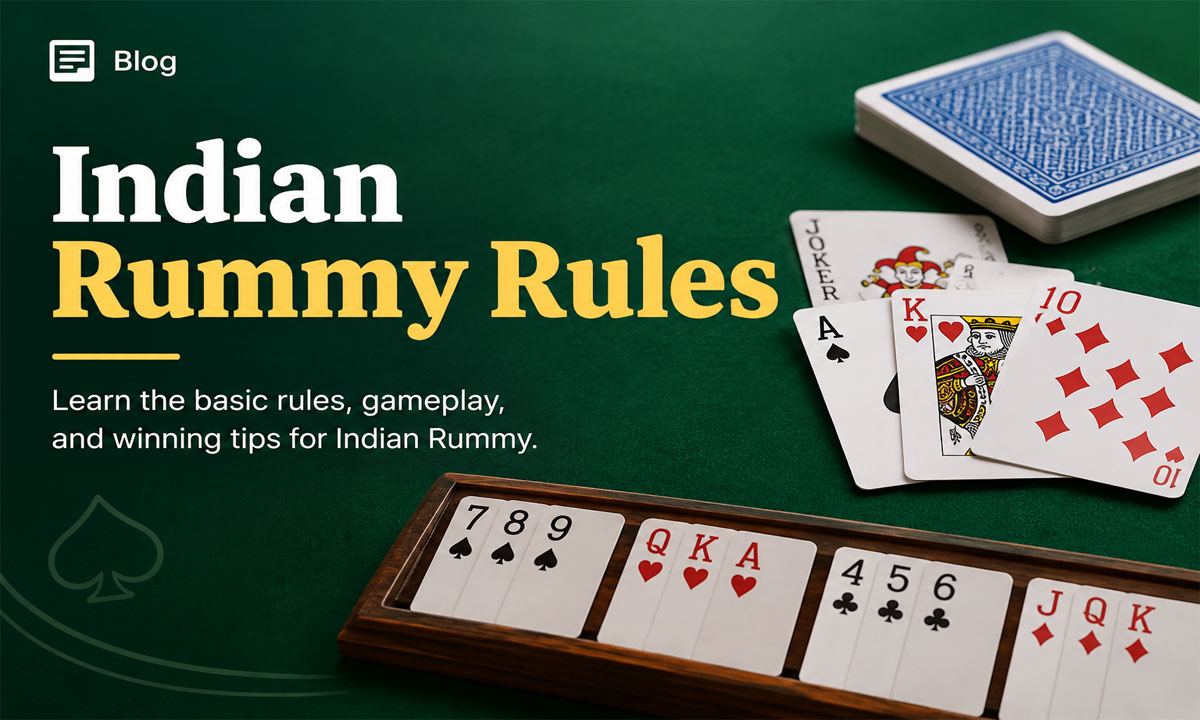
For decades, this game has been a beloved staple in households across South Asia. Whether it is a festive gathering in Mumbai or a weekend get-together in Lahore, the game brings families and friends together. Its popularity stems from its perfect balance of simplicity and deep strategy.
Today, millions of players have transitioned from physical cards to digital rummy platforms. Meanwhile, the core mechanics remain completely unchanged. You are still battling wits against your opponents, racing to complete your hand first.
The Core Objective Explained in One Sentence
If we had to summarize the entire game in a single breath, it would be this: The Objective of 13 Card Rummy is to arrange all 13 cards in your hand into valid sequences and sets before anyone else at the table does.
However, this is just the foundational layer of the goal. You cannot simply group cards together however you like. The game has strict structural requirements that you absolutely must meet to claim victory.
Specifically, you must form at least two mandatory sequences to win. Furthermore, all remaining cards must be melded into either additional sequences or valid sets. Achieving this perfect arrangement is the ultimate aim of every single round.
Understanding the 13-Card Deal
Every round begins with the dealer shuffling two standard decks of 52 cards. After shuffling, exactly 13 cards are dealt to each player at the table. This initial hand is the raw material you will use to achieve your objective.
Once the cards are dealt, the remaining stack forms the closed deck in the center of the table. The top card is flipped face-up to create the discard pile. From this point onward, the race begins.
When you pick up your 13 cards, your first task is to sort them by color and suit. By organizing your hand visually, you can immediately see how close you are to your final goal. Consequently, sorting prevents silly mistakes like throwing away a highly valuable card.
- 13 Card Rummy Rules for Beginners
- The Objective of 13 Card Rummy Explained
- 13 Card Rummy vs 21 Card Rummy Rules
What a “Valid Declaration” Means
Achieving the objective culminates in a single, final action known as a valid declaration. A declaration happens when you have successfully arranged all 13 cards according to the rules and show your hand to the table.
If your hand meets all the requirements, it is considered a valid declaration, and you win the round with zero penalty points. This is the exact moment you have fulfilled the primary objective of the game.
Conversely, if you declare prematurely or with an incorrect grouping, it is an invalid declaration. Therefore, understanding what makes a declaration valid is the most critical piece of knowledge for any beginner.
The Two Mandatory Sequences Rule
To make a valid declaration, you must form at least two sequences in your hand. A sequence is a run of three or more consecutive cards of the exact same suit. Without these two sequences, winning is mathematically and legally impossible.
Crucially, these sequences are divided into two types: a pure sequence and an impure sequence. At least one of your two mandatory sequences must be a pure sequence.
Pure Sequence Explained
A pure sequence consists of three or more consecutive cards of the same suit without using any jokers. For example, if Imran holds the 5, 6, and 7 of Hearts, he has formed a pure sequence. This is the most vital lifeline in your hand.
Impure Sequence Explained
An impure sequence is also a run of consecutive cards of the same suit, but it uses a joker to fill a missing gap. For instance, if Ayesha holds the 9 of Spades, a printed joker, and the Jack of Spades, the joker acts as the 10. Thus, she has successfully created an impure sequence.
What is a Set?
Once your two mandatory sequences are formed, what do you do with the rest of your cards? This is where a set comes into play. A set is a group of three or four cards of the exact same rank, but completely different suits.
For example, if Rahul groups the 8 of Clubs, 8 of Diamonds, and 8 of Spades, he has created a valid set. However, a set cannot contain two cards of the same suit.
How many sets do you actually need? Technically, zero. You can achieve your objective by forming only sequences across your entire 13-card hand. Sets are simply an optional, easier way to group your leftover cards once your mandatory sequences are secured.
Why Jokers Exist and How They Help
Jokers are your best friends on the rummy table. There are two types: the printed jokers that come with the deck, and the wild joker, which is a random card selected at the start of the deal.
If the 4 of Diamonds is selected as the wild joker, every single 4 in the deck instantly becomes a joker. These cards carry zero penalty points and can substitute for any missing card to form an impure sequence or a set.
Therefore, jokers drastically speed up your ability to reach the objective. However, remember that a joker cannot be used to form your mandatory pure sequence. You must build that pure sequence naturally.
The Difference Between Objective and Strategy
Beginners frequently confuse the objective of the game with the strategy used to play it. Clarifying this distinction is vital for your long-term success.
The objective is a fixed destination: arranging 13 cards into valid melds and declaring. It never changes, regardless of who you are playing against.
Strategy, meanwhile, is the roadmap you use to reach that destination. Strategies adapt constantly. For instance, observing the discard pile, bluffing an opponent, or hoarding middle cards are strategies used to achieve the ultimate objective efficiently.
How Variants Change The Objective of 13 Card Rummy
While the core mechanics remain the same, different variants tweak how you approach the long-term goal of the game. Let us compare the most popular formats played in India and Pakistan.
Rummy Variants Comparison Table
| Variant | Core Objective | Long-Term Goal | Best For |
| Points Rummy | Declare validly in a single round. | Win maximum points/cash in one fast deal. | Quick gameplay and beginners. |
| Pool Rummy (101/201) | Keep penalty points below 101 or 201. | Survive the longest without being eliminated. | Patient, strategic players. |
| Deals Rummy | Win the most chips over fixed rounds. | Outscore opponents across 2, 3, or 6 deals. | Competitive, analytical players. |
| 21-Card Rummy | Melds with 21 cards; requires 3 pure sequences. | Master complex value cards and massive hands. | Festival play and advanced veterans. |
How Scoring Connects to the Objective
In 13 card rummy, points have a negative value. High cards (Aces, Kings, Queens, Jacks) carry 10 penalty points, while numbered cards carry their face value. Jokers carry zero points.
When a player achieves the objective and makes a valid declaration, they receive zero points. The losing players must then calculate the total penalty points of their unmelded cards.
Therefore, achieving the objective is synonymous with keeping your score at zero. Even if you cannot declare first, your secondary objective is to group as many cards as possible to minimize your penalty points.
Common Misconceptions Beginners Have
Many new players step into the game with flawed ideas about what they are trying to achieve. One major misconception is that making sets is just as important as making sequences.
As mentioned earlier, without a pure sequence, your sets are completely meaningless. If Zara focuses all her energy on making three sets of Kings, Queens, and Aces, but fails to make a pure sequence, she will suffer a massive penalty.
Another misconception is that you must use all the cards drawn from the closed deck. In reality, you only ever use 13 cards. Your objective is simply to cycle through the deck until your 13-card hand is perfectly optimized.
What Happens When You Fail to Achieve the Objective?
Failure in rummy comes in two forms. The most common is simply being beaten to the punch. If Vikram declares his hand before you do, you lose the round and take penalty points based on your ungrouped cards.
The second, more devastating failure is an invalid declaration. If you rush and declare your hand without meeting the mandatory requirements, you are instantly penalized.
In standard Indian rummy rules, an invalid declaration results in a maximum penalty of 80 points. This massive penalty often ruins your chances of winning in multi-round games like Pool Rummy. Always double-check your pure sequence before hitting the declare button.
How the Objective Changes in 2-Player vs 6-Player Games
The core objective remains identical regardless of table size, but the pace at which you must achieve it shifts dramatically.
In a 2-player game, you must achieve your objective aggressively. The turns cycle back to you instantly, meaning the game can end in just a few moves. You must quickly decide whether to chase a difficult sequence or drop your hand entirely.
Conversely, in a 6-player game, achieving the objective requires patience and defense. Because the discard pile cycles through five other people before reaching you, you must carefully track what cards your opponents are picking up. Defending against their objectives becomes just as important as advancing your own.
Tips to Reach the Objective Faster
If you want to achieve the objective consistently, you need actionable habits. First, always discard high-value cards (like unmatched Kings and Aces) within your first three turns. Holding them too long bloats your penalty score.
Secondly, focus on the middle numbers. A 5, 6, or 7 is incredibly versatile because it can connect with cards above and below it to form sequences. Consequently, middle cards help you reach your goal faster than end cards.
Finally, master the art of observation. If Sneha picks up the 8 of Spades from the discard pile, do not throw the 7 or 9 of Spades. By paying attention, you prevent opponents from achieving their objective before you achieve yours.
Objective vs. Winning: Understanding the Difference
It sounds counterintuitive, but sometimes you can achieve your secondary objective even when you lose the round.
Winning means you were the first to make a valid declaration with zero points. However, if your starting hand is terrible, your immediate objective shifts from “winning” to “damage control.”
If you realize you cannot win, your new goal is to minimize your penalty score. You achieve this by dropping early for a 20-point penalty, or by quickly discarding heavy face cards. Smart players know that minimizing losses is just as crucial to long-term success as securing wins.
Play Responsibly and Safely
While rummy is recognized as a game of skill, it is highly engaging and can be competitive. It is essential to approach the game responsibly, especially when transitioning to online platforms.
Players in India and Pakistan must ensure they are 18 years of age or older before playing in cash tournaments. Always verify the local digital gaming laws in your specific region.
Furthermore, set strict time and budget limits for yourself. Treat the game as a fun test of your mental skills, not a way to make a living. Never chase your losses, and remember to take frequent breaks.
Frequently Asked Questions (FAQ)
1. What is the absolute most important rule to achieve the objective?
You must form at least one pure sequence (no jokers). Without a pure sequence, your entire hand is invalid, and you will take maximum penalty points if an opponent declares.
2. Can I achieve the objective using only sequences and no sets?
Yes, absolutely. Sets are completely optional. You can form three or four sequences across your 13 cards to make a perfectly valid declaration.
3. What happens if I make a mistake while trying to achieve the objective?
If you declare your hand incorrectly (e.g., missing a pure sequence or making a set with duplicate suits), you commit an invalid declaration. This results in an immediate 80-point penalty.
4. How do jokers help me reach the objective?
Jokers act as substitutes for missing cards. Once you have your mandatory pure sequence, you can use jokers to quickly complete impure sequences and sets, drastically speeding up your game.
5. Why do people drop out instead of trying to reach the objective?
If a player is dealt a terrible hand with no jokers and unconnected high cards, trying to win is mathematically risky. Dropping early takes a small 20-point penalty, saving them from a potential 80-point loss.
6. Do the objectives change if I play online versus offline?
No, the core objectives and rules remain exactly the same. However, online platforms usually feature automatic card sorting and strict turn timers, which can make achieving the objective feel much faster.
Conclusion
Understanding The Objective of 13 Card Rummy transforms the way you approach the table. You are no longer just reacting to the cards you are dealt; you are actively orchestrating a master plan to arrange your hand efficiently.
Remember the golden rule: everything revolves around securing that pure sequence first. Once you have that anchor, use your jokers wisely, discard heavy penalty cards, and keep a sharp eye on your opponents.
Whether you are enjoying a casual match with cousins or competing on a high-stakes digital app, keeping this objective clearly in your mind will elevate your skills. Deal the cards, focus on your goal, and enjoy the beautiful, strategic game of 13 card rummy!