










Card games are the lifeblood of social gatherings across South Asia. Whether it is a vibrant Diwali card party in India or a cozy Eid family gathering in Pakistan, a deck of cards naturally brings people together.
If you are exploring the world of skill-based card games, you have likely encountered the two most popular formats. Understanding the 13 Card Rummy vs 21 Card Rummy rules is essential for any player looking to dominate the tables.

Both variants share the same foundational mechanics of drawing and discarding. However, the strategies, game length, and complexity differ dramatically.
In this comprehensive guide, we will break down both formats step-by-step. By the end, you will know exactly which variant suits your playstyle and how to master them both.
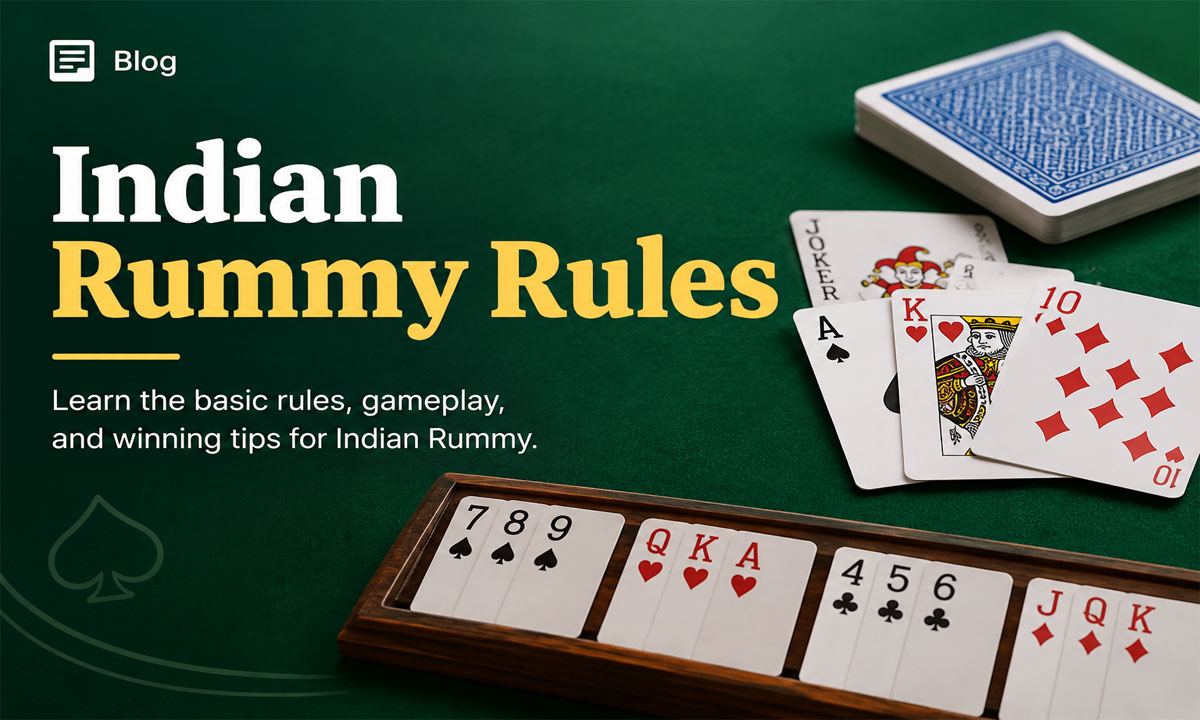
The Cultural History of Rummy in India and Pakistan
Rummy has a rich and fascinating history in the subcontinent. Originally evolving from Western matching games, it was heavily adapted to suit South Asian preferences.
The Indian and Pakistani versions of the game added wild jokers and strict sequence requirements. This evolution turned a simple game of luck into a highly complex game of skill, memory, and strategy.
Historically, families played the classic 13-card version during everyday get-togethers. In contrast, the much longer 21-card version was reserved for special festivals and marathon gaming sessions. Today, both variants have successfully transitioned into massive online gaming platforms.
Quick Overview: What is 13 Card Rummy?
13-card rummy is the undisputed king of everyday card games in South Asia. It is fast-paced, highly strategic, and incredibly accessible for beginners.
In this variant, players focus on organizing a small, manageable hand into specific groupings. Because the hand is relatively small, the game moves quickly from one player to the next.
Consequently, the 13-card format is the standard for most online tournaments. It perfectly balances quick decision-making with deep mathematical probability.
- 13 Card Rummy Rules for Beginners
- The Objective of 13 Card Rummy Explained
- 13 Card Rummy vs 21 Card Rummy Rules
Quick Overview: What is 21 Card Rummy?
21-card rummy, often called “Marriage Rummy” or “Festival Rummy,” is the marathon runner of card games. It is a longer, highly complex game that tests your patience and memory.
Because players hold a massive hand of 21 cards, the game demands advanced organizational skills. It introduces unique concepts like upper jokers, lower jokers, and special combinations that do not exist in the 13-card format.
If 13-card rummy is a sprint, 21-card rummy is a tactical marathon. Therefore, it is usually preferred by seasoned veterans who enjoy hours of uninterrupted gameplay.
Number of Cards Dealt to Each Player
The most obvious difference between the two games is right in the name. Understanding the dealing process is the first step in learning the 13 Card Rummy vs 21 Card Rummy rules.
In the 13-card variant, the dealer distributes exactly 13 cards to each player at the table. This hand size is easy to hold, sort, and track visually.
Meanwhile, in the 21-card variant, every player receives exactly 21 cards. Holding this many cards physically can be quite a challenge for beginners. Fortunately, online platforms automatically sort and display these massive hands for you.
Deck Size and Joker Rules in Each Format
Because the hand sizes differ so drastically, the number of decks required must scale accordingly.
For 13-card rummy, a standard game of two to six players uses two full 52-card decks. Additionally, it uses the standard printed jokers included in those boxes.
For 21-card rummy, you need significantly more cards. This game mandates the use of three standard 52-card decks for a standard table.
Understanding Value Cards in 21-Card Rummy
Jokers are heavily modified in the 21-card format. In addition to standard printed jokers and the wild joker (known as the Paplu), the game introduces “Value Cards.”
If the 7 of Spades (7♠) is the wild joker, the card immediately above it (8♠) becomes the Titlu (Upper Joker). The card immediately below it (6♠) becomes the Nichlu (Lower Joker). These specific value cards award bonus points to the player holding them.
Objective of the Game: What Are You Trying to Achieve?
Despite their differences, the core objective in both games remains fundamentally the same. Your ultimate goal is to arrange your entire hand into valid groupings, known as melds.
You must draw a card, fit it into your strategy, and discard an unwanted card. You repeat this cycle until every card in your hand belongs to a valid group.
Once your hand is perfectly organized according to the rules, you declare your hand to win the round. However, the specific rules for what makes a hand “valid” change drastically between the two variants.
How Melds Work in 13-Card Rummy
In 13-card rummy, you organize your cards into two specific types of melds: sets and sequences.
A set consists of three or four cards of the exact same rank, but completely different suits. For example, if Arjun groups the 5 of Hearts, 5 of Clubs, and 5 of Diamonds, he has formed a valid set.
A sequence is a run of three or more consecutive cards of the exact same suit. For instance, the 8, 9, and 10 of Spades is a valid sequence.
Grouping Differences in 21-Card Rummy
While 21-card rummy also uses sets and sequences, it introduces entirely new ways to group your cards.
A Tunnella (or London) is a group of three identical cards of the same rank and the exact same suit (e.g., three 9s of Hearts). In this format, a Tunnella is treated as a highly valuable pure sequence.
A Dublee is a pair of two identical cards of the same rank and suit. While Dublees do not win the game on their own, some regional rules allow players to declare if they successfully form eight distinct Dublees.
The Pure vs. Impure Sequence Rule in 13-Card Rummy
The most important rule in the 13-card format revolves around the purity of your sequences.
A pure sequence contains no jokers whatsoever. An impure sequence uses a joker to fill a missing gap in a consecutive run.
To make a valid declaration in 13-card rummy, you must have a minimum of two sequences. Crucially, at least one of these must be a pure sequence. Without a pure sequence, your entire hand is invalid.
Sequence Requirements in 21-Card Rummy Rules
Because you are holding 21 cards, the mandatory requirements for winning are much stricter.
In standard 21-card rummy, a single pure sequence is simply not enough. To make a valid declaration, you must form a minimum of three pure sequences.
Alternatively, forming at least three Tunnellas will also satisfy this strict requirement. This massive hurdle is what makes 21-card rummy significantly more challenging and time-consuming.
Turn Structure: Draw, Discard, and Options
The mechanics of a standard turn are identical in both formats. The game flows in a clockwise direction around the table.
During your turn, you must draw one card. You can either pick the top face-down card from the closed deck, or grab the visible face-up card from the discard pile.
After drawing, you evaluate your hand and discard one unwanted card face-up onto the discard pile.
Expert Tip: Never draw from the discard pile unless that specific card immediately completes a sequence or a set. Picking up open cards reveals your strategy to your opponents.
Declaration Rules and Showing Your Hand
When you have finally grouped all your cards according to the rules, it is time to win the round.
Instead of discarding your final card onto the regular pile, you place it face-down and announce “Show.” You then lay your melds open on the table for verification.
If Ayesha is playing 13-card rummy, she must show her one pure sequence, her second sequence, and her valid sets. If she is playing 21-card rummy, she must display her three mandatory pure sequences before the rest of her melds are counted.
Penalties for an Invalid Declaration
In both games, declaring your hand before it is perfectly valid is a disastrous mistake.
If you make an invalid declaration, you instantly lose the round and take the maximum possible penalty points. Therefore, you must always double-check your melds before hitting the “declare” button.
Scoring System in 13 Card Rummy
In the 13-card format, points are negative. The winner receives zero points, and the losers accumulate penalty points based on their ungrouped cards.
Face cards (Aces, Kings, Queens, Jacks) carry 10 penalty points each. Numbered cards carry their face value. Jokers hold zero points.
If a losing player fails to form a pure sequence, all 13 cards are counted as a penalty. However, to prevent players from going bankrupt in one round, the maximum penalty is capped at 80 points.
Scoring System in 21 Card Rummy
Scoring in 21-card rummy is vastly different and highly complex. In this game, players actually want to accumulate positive points through Value Cards.
The Paplu, Titlu, and Nichlu (Wild, Upper, and Lower Jokers) all award positive points to the player holding them. The losing players must pay the winner for these value points.
Furthermore, the maximum penalty for a losing hand in 21-card rummy is typically capped at 120 points, reflecting the larger hand size.
Comparison Table #1: Rules and Mechanics
Here is a clear breakdown of the mechanics when comparing 13 Card Rummy vs 21 Card Rummy rules side-by-side.
| Feature | 13 Card Rummy | 21 Card Rummy |
| Cards Dealt | 13 per player | 21 per player |
| Decks Required | 2 Standard Decks (for 2-6 players) | 3 Standard Decks (for 2-6 players) |
| Mandatory Sequences | Minimum 2 sequences | Minimum 3 pure sequences |
| Pure Sequence Rule | At least 1 pure sequence | At least 3 pure sequences |
| Special Groupings | Sets and Sequences only | Tunnellas and Dublees allowed |
| Value Cards | Standard printed & wild jokers | Upper (Titlu), Lower (Nichlu) & Wild |
| Pace of Play | Fast and aggressive | Slow, strategic, and patient |
Comparison Table #2: Scoring and Points Values
Understanding how points are calculated is vital for managing your bankroll across different formats.
| Scoring Element | 13 Card Rummy | 21 Card Rummy |
| Winning Score | 0 Points | 0 Points (plus collected Value Points) |
| Face Card Value | 10 Penalty Points | 10 Penalty Points |
| Maximum Penalty Cap | 80 Points | 120 Points |
| First Drop Penalty | 20 Points | 30 Points |
| Middle Drop Penalty | 40 Points | 75 Points |
| Value Card Bonus | None | Titlu, Nichlu, and Paplu award points |
Which Variant is Easier for Beginners?
Without a doubt, 13-card rummy is much easier for beginners to grasp.
Managing exactly 13 cards physically or mentally is quite manageable. Furthermore, needing only one pure sequence allows new players to recover quickly from a bad starting hand.
If Zara is completely new to card games, she should spend her first few months mastering the 13-card format. Moving directly to 21 cards can cause sensory overload and frustration.
Which Variant is Faster and More Strategic?
13-card rummy is significantly faster. A standard online round can conclude in just three to five minutes. This speed requires aggressive play and immediate decision-making.
In contrast, 21-card rummy is a slow burn. It is intensely strategic because you must track 21 cards, multiple jokers, and special combinations simultaneously.
Therefore, 21-card rummy feels like a heavy chess match, whereas 13-card rummy feels like a rapid-fire tactical sprint.
Popular Platforms and Variations in India and Pakistan
Today, you do not need to wait for a family festival to play these games. The digital landscape in South Asia has exploded with top-tier gaming apps.
In India, massive platforms host daily tournaments featuring both 13-card and 21-card formats. Players compete in variations like Points Rummy, Pool Rummy, and Deals Rummy across both hand sizes.
In Pakistan, players frequently enjoy these games through casual mobile apps and social gaming sites with friends. While the real-money landscape differs legally between the two countries, the sheer passion for the game remains identical.
Common Beginner Mistakes in Both Variants
Transitioning between these games often leads to predictable beginner mistakes.
The most common error in 13-card rummy is hoarding high-value cards (Kings, Queens, Aces) while waiting for a sequence. This inevitably leads to massive penalty points if an opponent declares early.
In 21-card rummy, beginners often forget to track the Upper and Lower Jokers. Because these cards award positive points, accidentally discarding a Titlu or Nichlu is a monumental strategic failure.
Expert Tips for Switching Between 13-Card and 21-Card Rummy
If Vikram is a seasoned 13-card player attempting 21-card rummy for the first time, he must completely shift his mindset.
First, patience is non-negotiable. You will not win a 21-card game in three turns. You must carefully curate your three pure sequences before aggressively using your jokers.
Secondly, use the “Sort” button constantly when playing online. Sorting 21 cards by color and suit visually prevents you from missing obvious Tunnellas or Dublees hidden in your massive hand.
Finally, do not be afraid to drop. In 21-card rummy, an initial drop costs 30 points. If you are dealt a dreadful hand with no jokers and no pure sequences, dropping is a highly intelligent mathematical decision.
Play Responsibly and Stay Safe
While mastering the 13 Card Rummy vs 21 Card Rummy rules is an exciting mental challenge, you must always approach the game responsibly.
Card games are meant to be a fun, social form of entertainment. Players must be 18 years of age or older to participate in real-money online tournaments. Always verify the digital gaming laws in your specific region before playing.
Furthermore, set strict time and budget limits before you log in. Never chase your losses, and remember to take frequent breaks to keep your mind sharp and analytical.
Frequently Asked Questions (FAQ)
1. Which rummy game uses more jokers?
21-card rummy uses significantly more jokers. Because it utilizes three full decks, there are more printed jokers in play. Additionally, it features the Titlu and Nichlu value cards alongside the standard wild joker.
2. Can I use a joker to form a Tunnella in 21-card rummy?
No. A Tunnella must consist of three identical cards of the exact same rank and suit naturally. You cannot use a joker to substitute for one of those cards.
3. What happens if I miss the pure sequence rule in 13-card rummy?
If you declare your hand without at least one pure sequence, your declaration is entirely invalid. You will automatically lose the round and receive the maximum penalty of 80 points.
4. Is the drop penalty the same in both variants?
No. Because the maximum penalty is higher in 21-card rummy, the drop penalties are also scaled up. An initial drop in 13-card rummy is 20 points, whereas in 21-card rummy, it is 30 points.
5. Can I play 21-card rummy with just two decks?
It is not recommended. Dealing 21 cards to multiple players quickly exhausts a two-deck setup, leaving almost no cards for the closed draw pile. Three decks are mandatory for a smooth game.
6. Do Dublees exist in 13-card rummy?
No. Dublees (a pair of two identical cards) are exclusive to 21-card rummy and specific regional variants. In 13-card rummy, a pair of identical cards has no strategic value.
7. Which version is better for short gaming sessions?
13-card Points Rummy is perfect for short sessions. A single deal can finish in under five minutes, making it ideal for playing during a quick commute or coffee break.
Conclusion: Which Rummy Format Should You Start With?
Understanding the 13 Card Rummy vs 21 Card Rummy rules highlights the brilliant versatility of South Asian card games. While both share the same DNA, they offer vastly different experiences at the table.
If you are a complete beginner, your path is crystal clear. You should start exclusively with 13-card rummy. It will teach you the fundamentals of pure sequences, discarding strategies, and penalty management without overwhelming you.
Once you have mastered the 13-card format and crave a deeper, more demanding mental challenge, the 21-card variant awaits. Grab your decks, arrange your melds, and enjoy the timeless thrill of rummy!