










If you are new to the exciting world of South Asian card games, you likely have one pressing question on your mind. You are probably wondering how many cards are dealt in India Rummy before you sit down to play your first game. Understanding the initial setup is the very first step toward mastering this classic game of skill.
To give you a direct and simple answer right away: in a standard game of Indian Rummy, exactly 13 cards are dealt to each player. This is why the game is universally known as “13-Card Rummy” across most of the subcontinent.
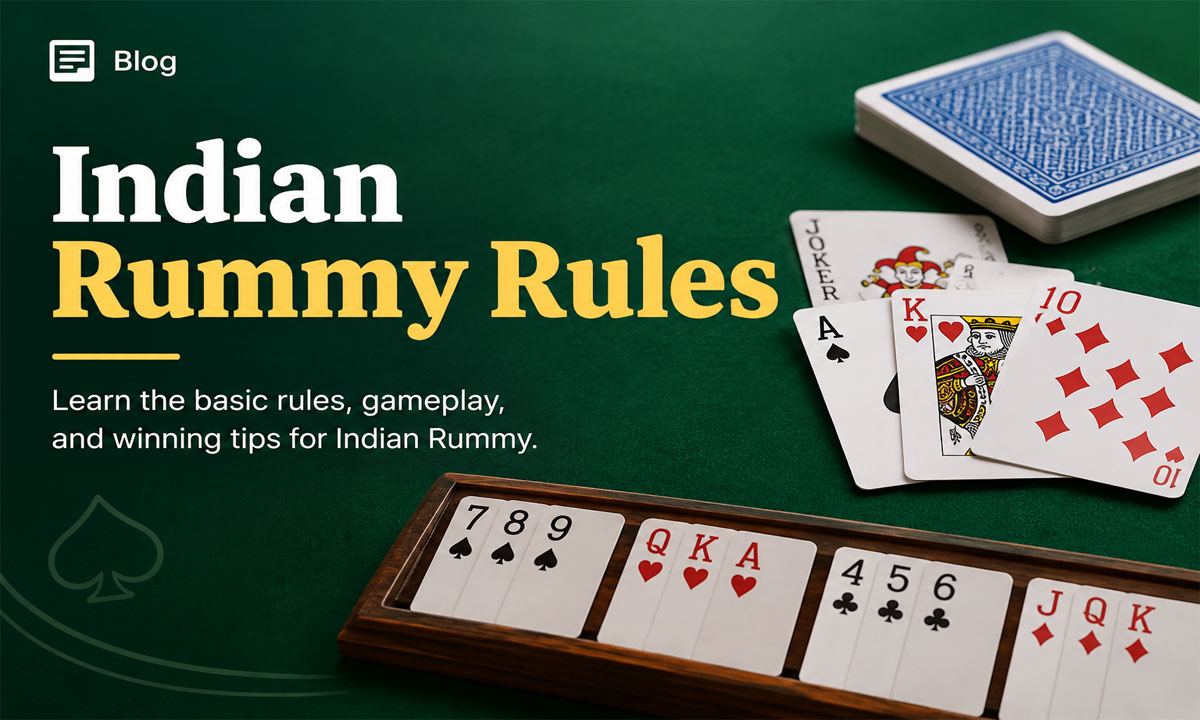
However, simply knowing the number is just the tip of the iceberg. The dealing process sets the stage for your entire strategy. Furthermore, depending on the specific variant you play, that number might actually change.
In this comprehensive guide, I will share my decade of experience in the gaming industry to explain everything you need to know. We will explore the dealing rules, deck requirements, game variants, and common beginner mistakes. Let us dive in and get you ready for your next game night!
The Cultural Popularity of Rummy in South Asia
Rummy is not just a simple card game; it is an integral part of social life in both India and Pakistan. For generations, families and friends have gathered around tables to test their skills against one another. It is a game that relies heavily on memory, strategy, and observation rather than pure luck.
In India, a festive Diwali party is almost incomplete without a highly competitive game of rummy. Similarly, in Pakistan, cozy winter weekends often feature cousins and friends battling it out over a deck of cards. It bridges generational gaps effortlessly.

Today, the game has evolved from physical living room tables to massive online platforms. Millions of players log in daily to play digitally. Therefore, understanding exactly how many cards are dealt in India Rummy is crucial whether you are playing with physical cards or clicking buttons on a smartphone app.
The Standard Deck: Understanding Your Tools
Before we discuss the actual deal, you must understand the tools used in the game. Indian Rummy is typically played with a standard French-suited deck of cards. This standard deck contains exactly 52 cards divided into four suits: Hearts, Diamonds, Clubs, and Spades.
Additionally, every deck comes with printed jokers. A printed joker acts as a wild card, meaning it can substitute for almost any other card to help you form valid groups. Usually, one or two printed jokers are included in each standard deck.
When playing with multiple people, a single deck of 52 cards is simply not enough to deal 13 cards to everyone. Therefore, Indian Rummy requires multiple decks depending on how many players join the table. We will explore the exact deck-to-player ratio shortly.
- How to Play Indian Rummy Step-by-Step
- Rummy Rules for Beginners
- How Many Cards Are Dealt in India Rummy?
Step-by-Step: The Dealing Process Explained
When you sit down at the table, the game begins with the dealing phase. First, players must randomly select a dealer. Often, everyone draws a single card from a shuffled deck, and the person with the highest card becomes the dealer.
Once chosen, the dealer takes the required number of decks and shuffles them thoroughly. Proper shuffling is essential to ensure that cards from previous games are not clumped together. After shuffling, the dealer offers the deck to the player sitting to their immediate left to “cut” the cards.
After the cut, the dealing officially begins. The dealer distributes the cards one by one, moving in a clockwise direction. They continue this circular process until every single player has exactly 13 cards in their hand.
During this process, players should wait until all cards are dealt before picking them up. Once Vikram, Ayesha, or any other player has their 13 cards, they can safely pick them up and begin sorting their hand.
Number of Players and Deck Requirements
Standard Indian Rummy accommodates anywhere from 2 to 6 players at a single table. Because every player needs 13 cards, the total number of cards required scales up quickly. Consequently, you must adjust the number of decks you use based on your group size.
If you are playing a quick heads-up game with just two players, you only need 26 cards for the deal. However, standard rules dictate that even a two-player game uses two full decks. This ensures there are plenty of cards left over for the drawing phase.
When a group expands to six players, 78 cards will be dealt out initially. Therefore, two standard decks (104 cards plus jokers) are absolutely necessary. Let us look at a clear breakdown of how the player count affects the required decks.
Table 1: Cards Dealt per Player Count
| Number of Players | Number of Standard Decks Used | Total Cards Dealt Initially | Cards Received per Player |
| 2 Players | 2 Decks (104 cards + Jokers) | 26 Cards | 13 Cards |
| 3 Players | 2 Decks (104 cards + Jokers) | 39 Cards | 13 Cards |
| 4 Players | 2 Decks (104 cards + Jokers) | 52 Cards | 13 Cards |
| 5 Players | 2 Decks (104 cards + Jokers) | 65 Cards | 13 Cards |
| 6 Players | 2 Decks (104 cards + Jokers) | 78 Cards | 13 Cards |
The Closed Deck and the Discard Pile
After the dealer finishes distributing the 13 cards to each player, there will be a significant stack of cards remaining. This remaining stack is placed face-down in the exact center of the table. In rummy terminology, this is called the Closed Deck or the draw pile.
Next, the dealer takes the very top card from the Closed Deck and flips it face-up next to the pile. This single face-up card creates the Open Deck, also known as the discard pile.
When the actual gameplay begins, players will take turns drawing cards. They can choose to blindly draw from the face-down Closed Deck, or they can pick up the visible card on the Open Deck. The dealing phase officially concludes once these two piles are set up.
The Crucial Role of the Joker in the Deal
Right after setting up the Closed and Open decks, there is one final, crucial step in the setup process. The dealer must randomly select the Wild Joker for the current round.
To do this, the dealer pulls one random card from the middle of the Closed Deck and places it face-up underneath the pile. The rank of this card becomes the Wild Joker. For example, if the dealer pulls a 7 of Hearts, then every single 7 in the deck (7 of Spades, 7 of Clubs, 7 of Diamonds) immediately becomes a Wild Joker.
These Wild Jokers are powerful tools. If Fatima is dealt two Wild Jokers in her initial 13 cards, she has a massive statistical advantage. Jokers carry zero penalty points and can replace missing cards to form valid sets and impure sequences.
However, you must remember that a joker cannot be used to form your mandatory “pure sequence.” A pure sequence requires three consecutive cards of the same suit with absolutely no jokers involved.
How Many Cards Are Dealt in India Rummy Variants?
As with all great games, players love to create exciting variations. While the core mechanics remain the same, different formats offer unique pacing and strategies. If you are wondering how many cards are dealt in India Rummy across different formats, the answer depends on the variant you choose.
Points Rummy
Points Rummy is the fastest and most popular variant played online. It is a single-deal game where players play for a pre-decided monetary or point value. In this rapid-fire version, the standard rule strictly applies: exactly 13 cards are dealt to each player.
Pool Rummy (101 & 201)
Pool Rummy is a longer, elimination-style game. Players are eliminated when their penalty points reach a certain limit (either 101 or 201 points). The last player standing wins the entire prize pool. Despite lasting multiple rounds, every single round still begins with 13 cards dealt to each player.
Deals Rummy
In Deals Rummy, players agree to play a fixed number of rounds (usually 2, 3, or 6 deals). Everyone starts with an equal number of chips. At the end of the final deal, the player with the most chips wins. Just like the previous variants, Deals Rummy firmly sticks to the 13-card deal.
21-Card Rummy
This is where things change drastically. 21-Card Rummy is a highly complex, festival-favorite variant widely played during Diwali. Because the hands are larger, this game requires at least three full decks. As the name suggests, exactly 21 cards are dealt to each player instead of the usual 13.
Table 2: Cards Dealt Across Popular Variants
| Rummy Variant | Decks Used (for 2-6 players) | Cards Dealt Per Player | Goal of the Game |
| Standard 13-Card | 2 Decks | 13 | Form valid melds with 13 cards |
| Points Rummy | 2 Decks | 13 | Win a single fast-paced deal |
| Pool Rummy | 2 Decks | 13 | Survive without reaching 101/201 points |
| Deals Rummy | 2 Decks | 13 | Win the most chips after fixed rounds |
| 21-Card Rummy | 3 Decks | 21 | Form larger, more complex combinations |
Why Exactly 13 Cards? The Mathematical Logic
You might be wondering why 13 is the magic number for standard rummy. It is not just a random choice; there is brilliant mathematical logic behind it. The ultimate goal of rummy is to arrange your cards into valid groups called sets and sequences.
A valid group must contain a minimum of three cards. If you divide 13 by 3, you get four groups with one card left over. Specifically, players aim to create three groups of 3 cards, and one group of 4 cards (3 + 3 + 3 + 4 = 13).
This perfect mathematical balance makes the game incredibly competitive. It forces players to hunt for that one final puzzle piece to complete their four-card group. If the game used 12 cards, it would end too quickly. If it used 14, players would struggle to find a place for the odd cards. Therefore, 13 is the sweet spot.
Rules for Misdeals: Too Few or Too Many Cards
Human error happens, especially during fast-paced family games. Sometimes, the dealer might make a mistake and deal the wrong number of cards. Knowing the misdeal rules is essential for maintaining fairness at the table.
For instance, imagine Arjun is dealing, and he accidentally gives Zara 14 cards while giving Rahul only 12. If this mistake is noticed before anyone draws their first card from the pile, the dealer must collect all the cards and reshuffle. The entire dealing process starts over from scratch.
However, if the game has already started and a player discovers they have the wrong number of cards, the rules become stricter. In most club rules, a player with an incorrect number of cards is automatically forced to drop out of that specific round and take a penalty.
When playing online, you never have to worry about this. The computer algorithm acts as a flawless dealer. Every single player is guaranteed to receive exactly 13 cards, eliminating human error entirely.
How the Deal Affects Your Strategy
The moment you pick up those 13 cards, your strategic brain must activate. How your cards are dealt dictates your entire approach to that specific round. A good player evaluates their hand within seconds.
First, you must check for a pure sequence. A pure sequence is three consecutive cards of the same suit without a joker. If your dealt 13 cards already contain a pure sequence, you have a massive head start. You should play aggressively.
Conversely, if you are dealt a completely disconnected hand with high-value cards (Kings, Queens, Aces) and absolutely no jokers, you are in danger. In this scenario, experienced players usually choose to “drop” the hand immediately. Taking a small 20-point penalty for a first drop is much smarter than risking an 80-point penalty by playing a terrible hand.
Common Beginner Mistakes Related to the Deal
Over my years of teaching this game, I have noticed beginners making the same mistakes right after the deal. Avoiding these pitfalls will instantly elevate your rummy skills.
- Forgetting to Sort: The moment you receive your 13 cards, you must sort them. Many beginners leave their cards scrambled, which causes them to miss obvious sequences. Always sort your cards by alternating colors (Red-Black-Red-Black) to prevent confusion.
- Miscounting Cards: Sometimes players accidentally drop a card under the table or overlap them in their hand. Always count your cards quickly after picking them up to ensure you have exactly 13.
- Ignoring the Jokers: Beginners sometimes fail to spot the Wild Joker in their dealt hand. They might accidentally discard it, thinking it is just a random, useless number card. Always double-check the Wild Joker at the bottom of the deck.
- Panic Discarding: After the deal, beginners often panic and throw away high-value cards immediately without looking at their potential. Take a deep breath, analyze your 13 cards, and make a calculated first discard.
Essential Tips for Managing Your 13 Cards
Managing 13 cards in your hand can feel overwhelming for a first-time player. They fan out widely, and it is easy to lose track of your strategy. Here are a few tips to manage your dealt hand effectively.
Firstly, physically separate your potential melds. If you have three cards that almost form a sequence, group them together on the left side of your hand. Keep your completely useless “deadwood” cards on the far right. This helps you know exactly what to discard next.
Secondly, keep your pure sequence totally isolated. Because a pure sequence is mandatory for a valid declaration, you do not want to accidentally break it apart during the heat of the game.
Lastly, practice observing the discard pile. Your 13 cards are only half the game; the other half is knowing what your opponents need. If the player next to you picks up a 6 of Clubs, do not discard a 5 or 7 of Clubs from your hand.
A Note on Responsible Gaming
While Indian Rummy is officially recognized as a game of skill, it is vital to approach it responsibly. Whether you are playing for fun at a family gathering or participating in online cash tournaments, responsibility should always come first.
Players must be 18 years of age or older to participate in real-money online rummy platforms in India. Always verify the legal status of online skill games in your specific state or province, as regional laws can occasionally change.
Furthermore, always set strict time and budget limits before you start playing. Rummy is highly engaging, and time can fly quickly. Play for entertainment, keep a clear mind, and never chase your losses.
Frequently Asked Questions (FAQ)
1. Is Indian Rummy always played with 13 cards?
In the standard format, yes. Whether you play Points, Pool, or Deals Rummy, you will always be dealt exactly 13 cards. The only major exception is the 21-Card Rummy variant.
2. What happens if I am dealt 14 cards by mistake?
In physical games, if noticed before the first turn, the dealer must reshuffle and re-deal. If noticed after the game starts, the player with the wrong card count is usually penalized or forced to drop.
3. How many jokers are used in a 13-card rummy game?
A standard game uses the printed jokers included in the two decks (usually 2 to 4 printed jokers total). Additionally, four cards of a specific rank become the randomly selected Wild Jokers for that round.
4. Can I play 13-card rummy with just one deck?
It is physically possible for two players, but it is highly unadvised. Using only one deck leaves very few cards in the Closed Deck, causing the game to stall quickly. Always use two decks for 2 to 6 players.
5. How many cards in 21-card rummy?
As the name clearly states, exactly 21 cards are dealt to every player in this specific festival variant. It requires three full decks to accommodate the larger hands.
6. Do I have to use all 13 cards to win?
Yes. To make a valid declaration and win the game, every single one of your 13 cards must be arranged into valid sets or sequences. You cannot have any ungrouped cards left over.
7. Who gets to deal the cards first?
The first dealer is chosen randomly, usually by having everyone draw a card from a shuffled deck. The player who draws the lowest card becomes the dealer. After that, the role of dealer passes clockwise after each round.
Conclusion
Understanding how many cards are dealt in India Rummy is your foundational step toward enjoying this brilliant game. As we have learned, the standard game universally relies on the magical number of 13 cards per player. This specific number creates the perfect mathematical balance, requiring players to build four distinct groups to achieve victory.
Whether you are dealing the cards for a festive game with friends or logging onto a digital platform for a quick tournament, the rules remain delightfully consistent. Remember to carefully sort your 13 cards, prioritize building your pure sequence, and keep a sharp eye on those valuable jokers.
Now that you know exactly how the dealing process works and how to set up the decks, you are fully prepared to take your seat at the table. Grab two decks of cards, invite some friends over, and enjoy mastering the beautiful, skill-based game of Indian Rummy!
1 Comment